The Pokémon Trading Card Game has been running since 1996 and is one of the easiest TCGs to pick up. A game takes 20–40 minutes, and you only need a 60-card deck and a few counters. Here's everything you need to play your first game.
What You Need
- A 60-card deck with at least one Basic Pokémon. You can have up to 4 copies of a card with the same name, except basic Energy, which has no limit, and only 1 ACE SPEC card. A typical deck is about 15–20 Pokémon, 30–35 Trainers and 10–14 Energy.
- Damage counters (dice or tokens) to track damage in 10s.
- A coin for coin-flip attacks and deciding who goes first.
- Markers for Poisoned and Burned. Most starter products include them.
The Card Types
- Pokémon: the creatures that battle. Each has HP (how much damage it can take), attacks, and sometimes an Ability. Basic Pokémon go straight into play; Stage 1 and Stage 2 Pokémon evolve from them.
- Trainers: Items (play as many as you like on your turn), Supporters (one per turn), Stadiums (one in play at a time, shared by both players) and Pokémon Tools (attached to a Pokémon).
- Energy: attached to your Pokémon to pay for attacks. Basic Energy gives one Energy of its type; Special Energy cards have extra effects.
 PokémonPikachu
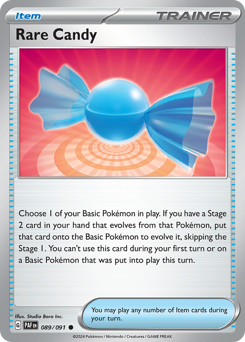 ItemRare Candy
 SupporterProfessor's Research
 StadiumArtazon
 ToolChoice Belt
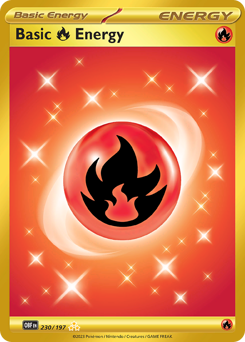 EnergyBasic Fire Energy
Where Everything Goes
Starting a Game
A Turn, Step by Step
Retreating swaps your Active Pokémon with one on your Bench. You discard Energy from it equal to its Retreat Cost, once per turn. An Asleep or Paralyzed Pokémon can't attack or retreat.
Evolving Pokémon
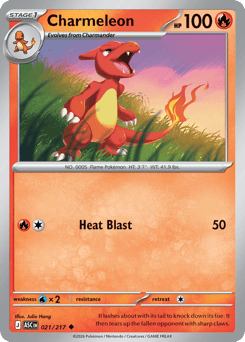
Pokémon evolve in stages: Basic → Stage 1 → Stage 2. Put the evolution card on top of the Pokémon it evolves from. You can't evolve a Pokémon on the turn it came into play, can't evolve on your own first turn, and each Pokémon can evolve only once per turn. Evolving keeps damage counters but removes Special Conditions like Poisoned. Rare Candy lets a Basic jump straight to its Stage 2.


The Energy System
Every attack lists its Energy cost. An attack costing two Colorless and one Fire needs 1 Fire Energy plus any 2 other Energy. You can attach 1 Energy card per turn from your hand, basic or Special, so plan a few turns ahead for your big attackers. Some cards let you attach extra Energy; they're among the most useful cards in a deck.
Weakness and Resistance
Most Pokémon list a Weakness (for example, Water ×2). If your attacking Pokémon is that type, the damage is doubled. Some list a Resistance (−30 from one type). Check your opponent's Active Pokémon before you choose an attacker.
How to Win
- Take all 6 Prize cards. Each time you Knock Out one of your opponent's Pokémon, take 1 Prize card. A Pokémon ex gives 2, and a Mega Evolution Pokémon ex gives 3.
- Leave your opponent with no Pokémon in play. If you Knock Out their Active Pokémon and they have nothing on their Bench to replace it, you win.
- Your opponent can't draw. If their deck is empty at the start of their turn, you win.
Which Cards Can I Play?
Tournaments and most stores play the Standard format, which uses only recent cards. Each card has a small regulation letter in the bottom corner; Standard allows the newest few letters and drops the oldest each spring. Casual games at home can use any cards you like.
Beginner Tips
- Run 4 copies of your key cards. Consistency wins games; a single copy is hard to find when you need it.
- Balance your Energy. Too many and you draw dead hands; too few and your Pokémon can't attack.
- Play a Supporter every turn. Supporters that draw or search for cards keep your hand full.
- Fill your Bench early. If your Active Pokémon is Knocked Out and your Bench is empty, you lose.
- Watch the Prize race. Count how many Knock Outs each player needs to take 6 Prizes. Spending 3 turns on a 1-Prize Pokémon while your opponent takes 2 Prizes a turn loses the race.
Build Your First Deck
A ready-made deck is the easiest start: the Pokémon TCG Battle Academy box and the League Battle Decks are built for new players. Or copy one of these into our Deck Builder, see which cards you already own, and buy the rest: