This article contains affiliate links. We may earn a small commission if you purchase through an eBay link — at no extra cost to you.
Getting a Pokémon card graded by PSA, BGS, or CGC can multiply its value — or it can cost you $25 to grade a card worth $8. Whether grading is worth it depends entirely on which card you're holding. This guide gives you the exact math to decide.
What Does Grading Actually Cost?
PSA's standard service tier runs $25 per card for cards valued under $499 (bulk economy tier at $18/card requires minimum 50 cards). BGS (Beckett) standard is $25–$30. CGC standard is $25. Shipping and insurance typically add $15–$30 round trip. Budget $40–$55 total per card at standard service tiers.
Turnaround times as of 2026: PSA standard is 45–90 days. BGS standard is 30–60 days. CGC standard is 20–45 days. Premium express tiers exist at $75–$150+ per card with 5–15 day returns.
The Grade Multiplier: What a PSA 10 Is Worth
Grading adds value two ways: authentication (eliminates fake risk for buyers) and condition locking (a PSA 10 will always be a PSA 10). The multiplier varies by card:
- Vintage high-value cards (Base Set, 1st Edition): PSA 10 commands 5–20x raw price. A raw Base Set Charizard might be $60; a PSA 10 is $2,500+.
- Modern chase cards (Special Illustration Rares, SARs): PSA 10 typically 1.5–3x raw. A $150 raw SIR becomes $250–$450 graded.
- Common/bulk cards: Essentially no multiplier. A raw $5 holo is $5 graded, minus your $45 in costs.
Which Pokémon Cards Are Worth Grading in 2026?
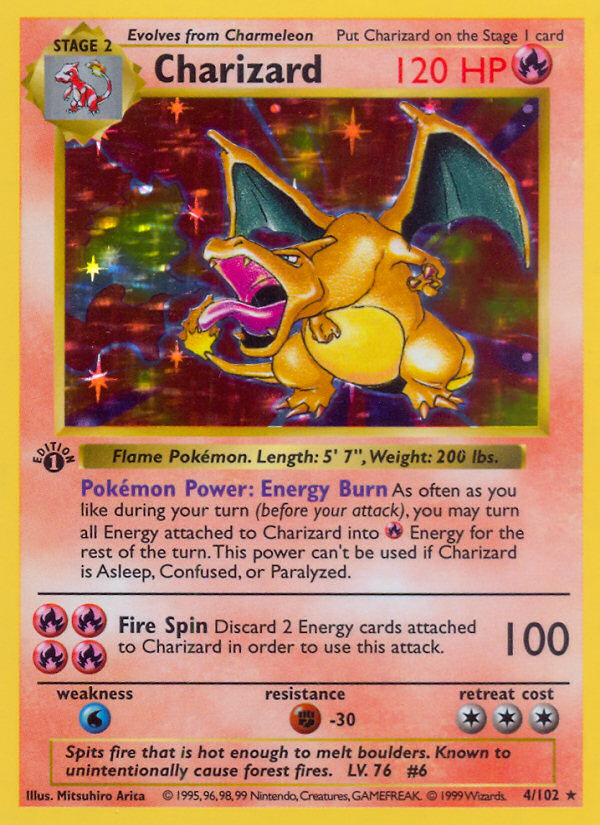
Any Base Set Charizard in Near Mint condition is worth grading if you're selling. The authentication alone increases buyer confidence and price. 1st Edition and Shadowless copies are obvious candidates. Even Unlimited NM copies in high-centering condition can reach PSA 9–10. See PSA 10 Charizard prices on eBay ↗

Modern SIRs are the most commonly graded modern cards in 2026. A raw NM copy at $100 can hit $200–$350 in PSA 10, making it one of the better modern grading propositions — provided you can actually achieve a 10 (centering is the most common failure point on SIRs).
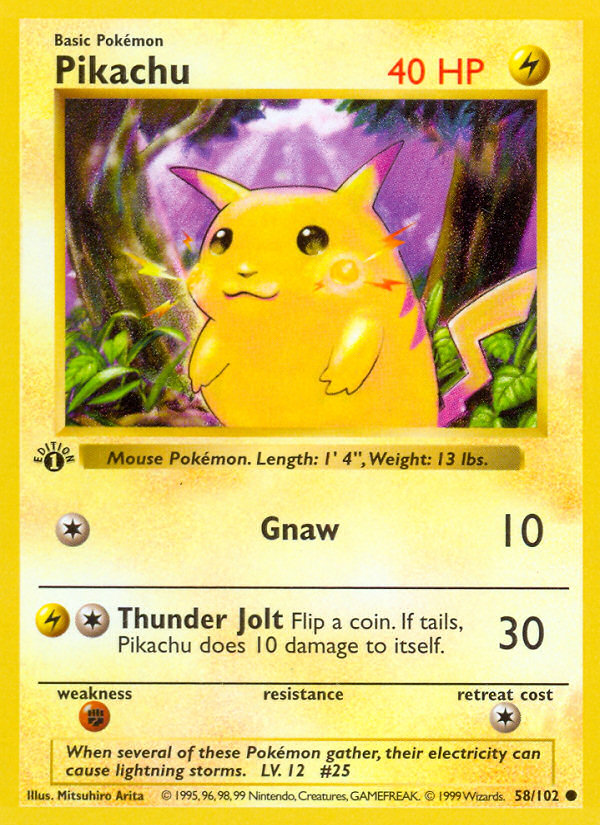
Shadowless commons and uncommons from Base Set are frequently overlooked grading candidates. Low PSA 10 populations on many of these mean premiums are real — a Shadowless Pikachu PSA 10 regularly sells for $500–$1,000+. The challenge is finding copies with proper centering on 25-year-old cards. Track Pikachu Base Set prices →
Cards That Are NOT Worth Grading
- Reverse holos from modern sets unless the card is a chase pull ($30+ raw). Most reverse holos retail for $1–$5 raw and $5–$8 graded.
- Damaged cards. PSA grades on a 1–10 scale. A card with edge wear, creases, or scratches will grade PSA 5–7. A PSA 7 is rarely worth more than a well-kept raw card, and often less.
- Common bulk from modern sets. The population of PSA 10s on common Scarlet & Violet cards is enormous — no scarcity premium.
- Cards you bought pre-graded that you want to re-slab. PSA will not re-grade a card still in another grader's slab.
PSA vs BGS vs CGC for Pokémon
PSA is the default for resale. PSA-labeled cards consistently sell at higher prices on eBay than equivalent BGS or CGC slabs — buyer recognition drives a real premium. For most Pokémon grading, PSA is the right choice.
BGS (Beckett) uses subgrades (centering, corners, edges, surface) and awards a Pristine 10 (black label) for near-perfect cards. A BGS Pristine 10 on a vintage Pokémon card can command a massive premium — often 2–3x a PSA 10 — but achieving it requires flawless copies. BGS 9.5 (gold label) is comparable to PSA 10 on the market.
CGC is the fastest-growing third option, with competitive pricing and faster turnarounds. CGC Pokémon slabs trade at a small discount to PSA on most cards, but the gap is narrowing. Good option if turnaround time matters.
How to Maximize Your Grade
- Check centering first. Centering is the single most common reason cards fail PSA 10. Use a centering ruler or app — PSA 10 requires 55/45 or better on both axes for most sets.
- Sleeve immediately. Even a single fingerprint degrades surface score. Handle cards by edges only and sleeve in a penny sleeve, then a top-loader, before submission.
- Don't clean cards. Any cleaning attempt risks surface scratches that result in automatic PSA 8 or lower. Submit raw.
- Grade in batches. Bulk economy tiers (50+ cards) at PSA drop per-card cost significantly. Accumulate a batch if you're not in a rush.
The Bottom Line
Grading makes financial sense for: any Near Mint vintage Pokémon card worth $50+ raw, modern chase cards (SIRs, alt arts) worth $80+ raw that you're planning to sell, and any card where the PSA 10 population is below 200. For everything else, the costs outweigh the return. When in doubt, check the eBay sold comps for PSA 10 vs. raw NM before submitting. See recent PSA 10 sold prices on eBay ↗
Related Articles
Share this article
Track Every Card Mentioned in This Article
Add cards to your collection, watch market prices move in real-time, and connect with other collectors.
Create Free Account →