This article contains affiliate links. We may earn a small commission if you purchase through an eBay link — at no extra cost to you.
Card grading has gone from a niche hobby practice to an essential part of serious TCG collecting. A raw Charizard is just a Charizard. A PSA 10 Charizard is a commodity — it can be bought, sold, and priced with precision. But with three major grading companies competing for your submission dollars, choosing the wrong one can cost you real money in turnaround time, fees, and resale premium.
This guide breaks down PSA, BGS (Beckett), and CGC in plain terms so you can decide which service makes sense for the cards you're submitting.
What Is Card Grading and Why Does It Matter?
Grading is the process of having a third-party company assess a card's condition, assign it a numerical score, then seal it in a tamper-evident plastic case called a "slab." The grade is authenticated and tied to a unique certification number that buyers can verify online.
Why does it matter? Three reasons:
- Price precision: A PSA 10 Charizard isn't "a nice Charizard" — it's a specific commodity with a specific price range. Grading removes ambiguity from high-value transactions.
- Authenticity guarantee: Counterfeit cards, particularly for high-value Pokémon cards, are a real problem. A slab from a reputable company tells buyers the card is real.
- Preservation: A graded card is sealed and protected from handling damage indefinitely. For a card worth thousands of dollars, that matters.
PSA: The Market Leader
Professional Sports Authenticator (PSA) is the most recognizable name in card grading by a significant margin. If you've seen a graded card in a YouTube video, at a card show, or in an eBay listing, odds are it was in a PSA slab. That market recognition translates directly into resale premium.
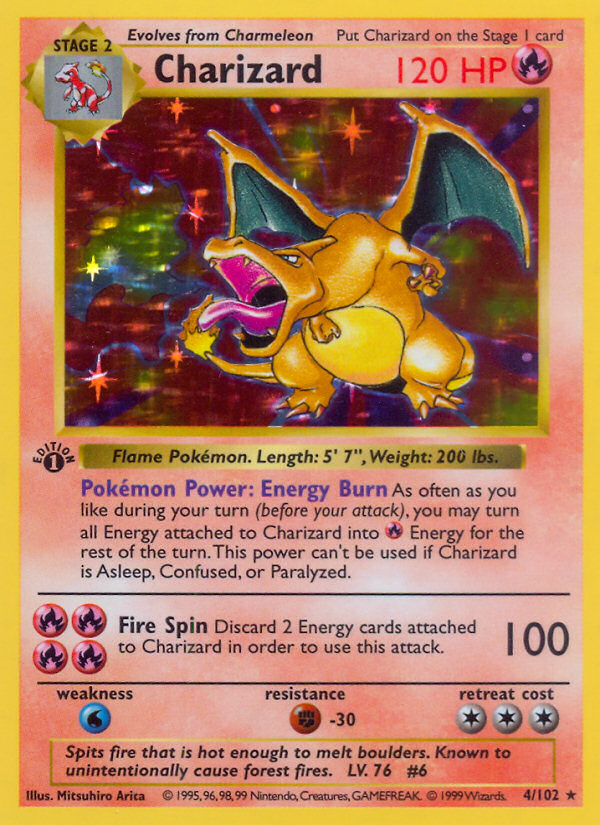
PSA 10 is the gold standard for Pokémon card collecting. A PSA 10 Shadowless Charizard commands prices that raw copies cannot approach, and the PSA certification is what makes that premium possible. PSA grades on a 1–10 scale, with 10 being Gem Mint.
PSA strengths:
- Highest brand recognition of any grading company — buyers across every TCG know and trust PSA
- Best resale liquidity, especially on eBay — PSA 10 slabs sell faster and at higher prices than equivalent BGS or CGC grades
- Population reports go back decades and are trusted industry-wide
- The PSA Registry and PSA Set Registry create collector communities around the grades
PSA weaknesses:
- No subgrades — you get a single number, not a breakdown of centering/surface/corners/edges
- Historically slower turnaround times, particularly at bulk service tiers
- Prices have risen significantly — economy-tier submissions now run $25–$50 per card
- Grading consistency has been debated online for years, with some collectors calling grades "harsher" on certain cards
BGS / Beckett: The Subgrade Specialists
Beckett Grading Services (BGS) is PSA's closest rival, with particular strength in the sports card market and a devoted following among Magic: The Gathering collectors. What sets BGS apart is its subgrade system — every card receives four individual scores for centering, corners, edges, and surface, in addition to the composite final grade.
BGS 10 "Black Label" — achieved only when all four subgrades are 10 — is the rarest and most coveted grade in the hobby. A BGS 9.5 is widely considered equivalent to a PSA 10 in terms of condition (BGS grading is generally considered tighter), but BGS 9.5s sell for less than PSA 10s because of PSA's brand dominance.
BGS strengths:
- Subgrades provide transparency — you know the centering, corners, edges, and surface individually
- BGS 10 Black Label is the most prestigious grade achievable and commands extreme premiums
- Preferred by MTG collectors and sports card collectors who value the detail
- Beckett is well-regarded for consistency and documentation
BGS weaknesses:
- Resale liquidity for Pokémon is lower than PSA — casual buyers gravitate toward PSA
- Pricing tiers are similar to PSA at the economy level
- The old BGS slab design has been criticized as less visually appealing than competitors
CGC: The Fast-Growing Challenger
Certified Guaranty Company (CGC) built its reputation in comic book grading before expanding into trading cards. CGC has grown rapidly in the TCG space, particularly for Pokémon, and has earned a reputation for competitive pricing, faster turnaround times at the economy tier, and excellent handling of vintage cards.
CGC grades on a 1–10 scale with half grades, and a "Pristine 10" designation for perfect submissions. CGC has also been an innovator with its "Verified Signature" designation, which authenticates artist signatures on cards — a feature PSA and BGS have historically been slower to implement for TCG products.
CGC strengths:
- Often faster turnaround times than PSA at comparable price points
- Strong reputation for vintage Pokémon card handling and grading
- Signature verification program is industry-leading for TCGs
- Growing population — more CGC-graded cards appearing at major auctions
- Slab design is clean and well-regarded by collectors
CGC weaknesses:
- Still trails PSA in brand recognition, which affects resale prices for most cards
- Smaller population reports than PSA — fewer data points for rarity assessment
- Less established for MTG and sports cards
Cost and Turnaround Comparison
Grading costs and turnaround times change frequently — always check current pricing on each company's website before submitting. The table below reflects approximate 2026 figures at the economy/standard service tier:
| Company | Economy Tier Cost | Approx. Turnaround | Best For |
|---|---|---|---|
| PSA | $25–$50/card | 30–60 days | Pokémon, all TCGs for resale |
| BGS | $20–$40/card | 20–45 days | MTG, sports, subgrade buyers |
| CGC | $15–$35/card | 15–35 days | Vintage Pokémon, signed cards |
SGC and HGA: The Alternatives
Sportscard Guaranty (SGC) is a respected option for vintage sports cards and has a niche following in the Pokémon community for its clean slab design and competitive pricing. SGC grades are increasingly accepted in major auctions and sales. For most TCG collectors, however, SGC's smaller population reports and lower brand recognition mean lower resale prices.
HGA (Hybrid Grading Approach) grades cards on color-matched slabs and has attracted attention for its visual appeal, but the grading company has faced criticism over consistency and business practices. Most serious collectors avoid HGA for cards where resale matters.
What Grade Will My Card Get?
This is the question every collector asks before submitting. The honest answer: it depends on factors you need to assess before you spend the submission fee.
- Centering: The most common reason a card fails to reach PSA 10 or BGS 9.5. On the front, PSA requires 55/45 or better on both axes. BGS is tighter. Use a centering tool or ruler before submitting.
- Surface scratches: Hold the card at an angle under a bright light and tilt slowly. Any scratches to the holo or print layer will be caught. These are the second most common grade-killer.
- Corner whitening: Soft corners that show white fiber on the edges. Even minor corner whitening typically pushes a card below PSA 10.
- Print defects: Ink spots, print lines, and registration errors from manufacturing. These are not the collector's fault but do affect grades. PSA handles some print defects with a "qualifier" designation.
When to Grade vs. When Not to Grade
Grading makes financial sense in specific situations. It does not make sense as a blanket practice for every valuable card you own.
Grade when:
- The card in PSA 10 is worth at least 3–4x the raw card value plus grading fees
- You have reason to believe your copy is in exceptional condition (pulled from fresh packs, handled carefully)
- You're holding for the long term and want authenticated preservation
- The card is a high-profile vintage piece where authentication matters
Don't grade when:
- The raw card is worth under $50 — fees will swamp the value added
- You can see obvious centering or surface issues with the naked eye
- You need the card liquid quickly — grading takes weeks to months
- The graded population for this card at PSA 10 is already very high, suppressing the premium
Which Company Should You Use?
For most Pokémon collectors focused on resale: PSA. The brand premium is real and it affects the price you'll get when selling.
For Magic: The Gathering collectors or anyone who values subgrade transparency: BGS. The detail is genuinely useful and the MTG community is more familiar with BGS grades.
For vintage Pokémon cards, signed cards, or when you need faster turnaround at a lower cost: CGC. The quality of CGC grading has improved significantly and the brand recognition gap is narrowing.
The right answer also depends on your timeline and budget. Submitting to PSA in bulk at the economy tier is the most cost-effective approach for most collectors — you'll wait longer but pay less per card and get the best resale premium.
Check grading resources on Hardcore Collectors →Related Articles
Share this article
Track Every Card Mentioned in This Article
Add cards to your collection, watch market prices move in real-time, and connect with other collectors.
Create Free Account →