This article contains affiliate links. We may earn a small commission if you purchase through an eBay link — at no extra cost to you.
A collection is only as valuable as its condition. You can buy the right cards at the right prices, track the market perfectly, and still destroy thousands of dollars of value through poor storage. Card damage is largely irreversible — a bent corner, a surface scratch, or humidity-induced warping can take a PSA 10-candidate card and make it permanently ungradable at a premium level.
This guide covers every layer of proper card storage, from the moment a card comes out of a pack to decades-long archival storage. Whether you're protecting $0.10 commons you might need for a deck or a $10,000 grail, the right storage approach is simple once you understand the principles.
Why Storage Matters More Than Most Collectors Think
The three enemies of trading cards are humidity, temperature fluctuation, and light. Understanding why helps you make good storage decisions without memorizing a long list of rules.
Humidity causes card warping because cards are made of cellulose-based paper layers that absorb moisture at different rates. When the ambient humidity is high, the paper layers swell unevenly, causing the card to bow or warp. This is the most common cause of "wave" damage in collections — you've probably seen it in older cards that have that slight curved shape when laid flat. High humidity also accelerates surface degradation, mold growth on cards stored in contact with each other, and delamination of foil layers on holo cards.
Temperature fluctuation — not just high heat, but the cycling between warm and cool — causes repeated expansion and contraction in card materials. A card stored in an attic that gets to 110°F in summer and 30°F in winter will experience dramatic physical stress over the years. Adhesive layers (particularly in older cards) can fail; foil treatments can crack; paper fibers can break down.
Light, particularly UV light, causes color fading and yellowing of the card's white borders and back. A card displayed in direct sunlight for a few months will show visible fading that cannot be reversed and will significantly affect grade.
Penny Sleeves: The Foundation
Every card in your collection that you care about — even marginally — should be in a sleeve. Penny sleeves (also called "soft sleeves" or "poly sleeves") are the minimum acceptable protection. At roughly $5–10 per 100, they're cheap enough that there's no excuse for leaving cards unprotected.
Penny sleeves protect against:
- Surface scratches from cards sliding against each other in storage
- Fingerprint oils and skin contact damage
- Edge nicks from handling
- Minor dust accumulation on surfaces
Penny sleeves do NOT protect against significant impact damage, moisture, temperature extremes, or UV light. They're the first layer, not the complete solution.
Use the right size for your TCG. Standard-sized TCG sleeves (63.5mm x 88mm) fit Pokémon, Magic: The Gathering, Yu-Gi-Oh! (with slight extra room), Lorcana, and Digimon cards. Yu-Gi-Oh! cards are slightly smaller (59mm x 86mm) and fit better in sleeves specifically designed for YGO sizing.
Perfect Fit Sleeves: For Grading Submissions
Perfect fit sleeves are thinner, tighter-fitting sleeves designed specifically to go around a card before it goes into a standard sleeve or top loader. They're essentially invisible on the card — you can barely tell they're there.
Perfect fits serve one primary purpose: they seal the card in a layer of plastic before any other sleeve is added, preventing the inner sleeve's interior from touching the card surface. This matters for two reasons: it protects the surface from any microscopic abrasion caused by the inner sleeve moving against it, and it's the standard preparation for grading submissions.
PSA, CGC, and BGS all recommend or accept perfect fit + card saver (or top loader) as the standard submission preparation. If you're sending a card to be graded, it should be in a perfect fit sleeve.
Double Sleeving: For Valuable Cards in Active Use
Double sleeving — a perfect fit inner sleeve plus a standard outer sleeve — is the standard for any valuable card that's being actively played or handled. Competitive TCG players who are playing with expensive singles double-sleeve as a matter of course.
For collection-only cards, double sleeving inside a binder or box adds a layer of protection but isn't always necessary if the card is in a controlled storage environment. For any card over $50, double sleeving is worth the minimal cost.
Top Loaders: Rigid Protection for Singles
Top loaders are the rigid plastic holders designed for individual cards. A sleeved card goes into the top loader, providing rigid protection against bending that soft sleeves cannot offer. Top loaders are the standard storage unit for mid-value singles — anything from a $20 card up to a few hundred dollars.
Standard top loaders (35pt thickness) fit most TCG cards. Cards that have been double-sleeved may require slightly thicker top loaders (sometimes labeled as 75pt or 100pt) to fit without forcing. Forcing a double-sleeved card into an undersized top loader can scratch the sleeve and potentially the card.
Put a penny sleeve or team bag over the top of the top loader to keep it closed and prevent the card from sliding out. Storing top loaders vertically in a box with dividers is better than stacking them horizontally — horizontal stacks create uneven pressure on the bottom cards over time.
One-Touch Magnetic Holders: For High-Value Singles
One-touch magnetic holders (sometimes called "snap cases" or "magnetic cases") are the premium protection tier for individual high-value raw cards. Unlike top loaders, which require sliding cards in and out, one-touch holders open like a clamshell, allowing the card to be placed in without any contact pressure.
The magnetic closure holds the case shut without any mechanical stress on the card. UV-resistant versions (clearly labeled on the packaging) block the UV light that causes fading. For any raw card over $200, a UV one-touch is appropriate protection.
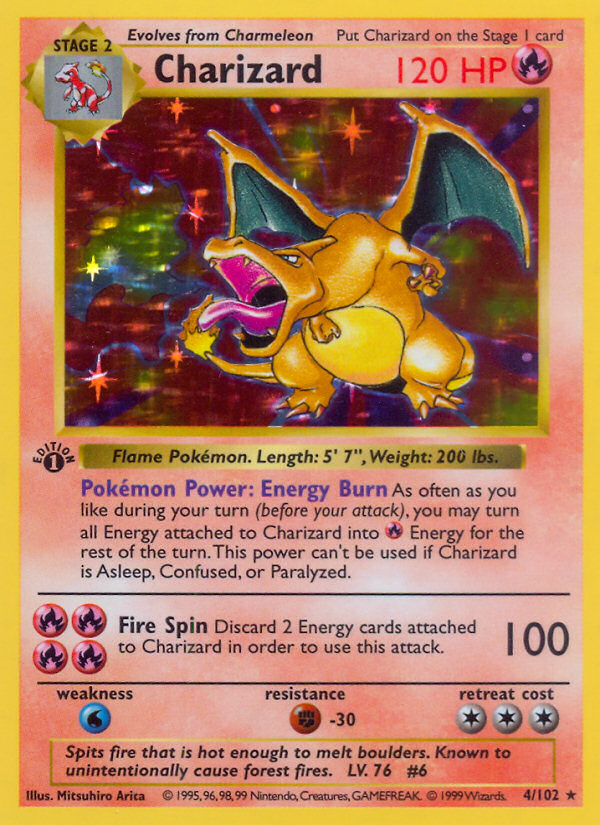
A card like this — a raw NM Unlimited Charizard — should be in a perfect fit sleeve, then a one-touch UV magnetic holder, then stored in a cool, dry, dark environment. This is the standard for any high-value raw card you intend to preserve in gradeable condition.
Card Savers: The Grading Submission Standard
Card Savers are a specific brand of semi-rigid card holder that have become the de facto standard for grading submissions to PSA, CGC, and BGS. They're semi-flexible (not as rigid as a top loader) and open at the top. Their design prevents the card from touching the sides of the holder during shipping, which is important because any lateral movement inside a rigid top loader can cause edge and corner damage on the card's sleeve.
Card Saver 1 fits standard TCG card sizes (double-sleeved). Card Saver 2 is for slightly thicker submissions. When preparing a grading submission, the standard stack is: card → perfect fit sleeve → Card Saver 1. Do not use top loaders for grading submissions unless a specific grading company's instructions require them.
Binders: The D-Ring vs. O-Ring Debate
Binders are the most common storage solution for bulk collections. The single most important piece of binder advice in the entire collecting community is this: use D-ring binders, not O-ring binders.
O-ring binders — the classic round-ring binders you used in school — cause a specific and irreversible damage pattern called "ring indentation." Because O-rings close in the middle of their circle, the pages on either side of the center of the binder are under different amounts of pressure. Cards sleeved in pages that sit near the rings receive lateral pressure that gradually creates a slight crease or indent running along the card. This is a permanent condition defect that will prevent a card from achieving top grades.
D-ring binders close at the back of the ring, which distributes page tension evenly across the binder. Cards stored in D-ring binders do not develop ring indentation. Ultra Pro and BCW both make D-ring binders specifically designed for TCG card pages.
Binder Pages and Materials
Not all binder pages are equal. Avoid binder pages with PVC (polyvinyl chloride) — older binder pages used PVC, which off-gasses chemicals over time that damage card surfaces. Look for pages specifically labeled as "acid-free" and "PVC-free." Ultra Pro Platinum Pages and Dragon Shield binder pages are both safe choices.
For high-value cards you're keeping in a binder, use the 1-card or 4-card per page format rather than the standard 9-pocket. Fewer cards per page means less pressure and card-to-card contact.
BCW Storage Boxes: Bulk Storage Done Right
For bulk commons and uncommons — the kind of cards you're keeping primarily for gameplay or just can't bring yourself to throw away — BCW storage boxes (also called "long boxes" or "short boxes") are the industry standard. They hold hundreds or thousands of sleeved cards upright, are made of acid-free cardboard, and are cheap enough to buy in quantity.
BCW makes short boxes (holds ~200 cards), long boxes (holds ~800 cards), and various other sizes. They stack neatly, label easily, and store in any climate-controlled interior location. Store them upright on shelves, not stacked horizontally in ways that put weight on the bottom box.
Long-Term Archival Storage
For cards you're holding for five-plus years — either as investments or just as pieces you love — long-term archival storage requires a few additional steps beyond basic sleeving:
- Silica gel packets: Include food-grade silica gel desiccant packets in your storage boxes and bins. Silica gel absorbs moisture from the air and maintains a lower humidity level inside closed containers. Replace or recharge them annually (or when the color-indicator beads turn from blue/orange to pink, depending on type).
- Acid-free materials: Ensure every material touching your cards — sleeves, pages, boxes, dividers — is labeled acid-free. Acid from non-archival materials migrates into card stock over time and causes yellowing and paper degradation.
- Climate control: Long-term storage should be in climate-controlled space. Interior closets in air-conditioned homes are generally adequate. If you have substantial value in raw cards, a temperature/humidity monitor (available for under $20) placed in your storage area will give you confidence that conditions are within the acceptable range year-round.
- Darkness: Keep stored cards out of direct light. Opaque storage boxes, closed closets, or UV-filtering sleeves on any display items protect against light-induced fading.
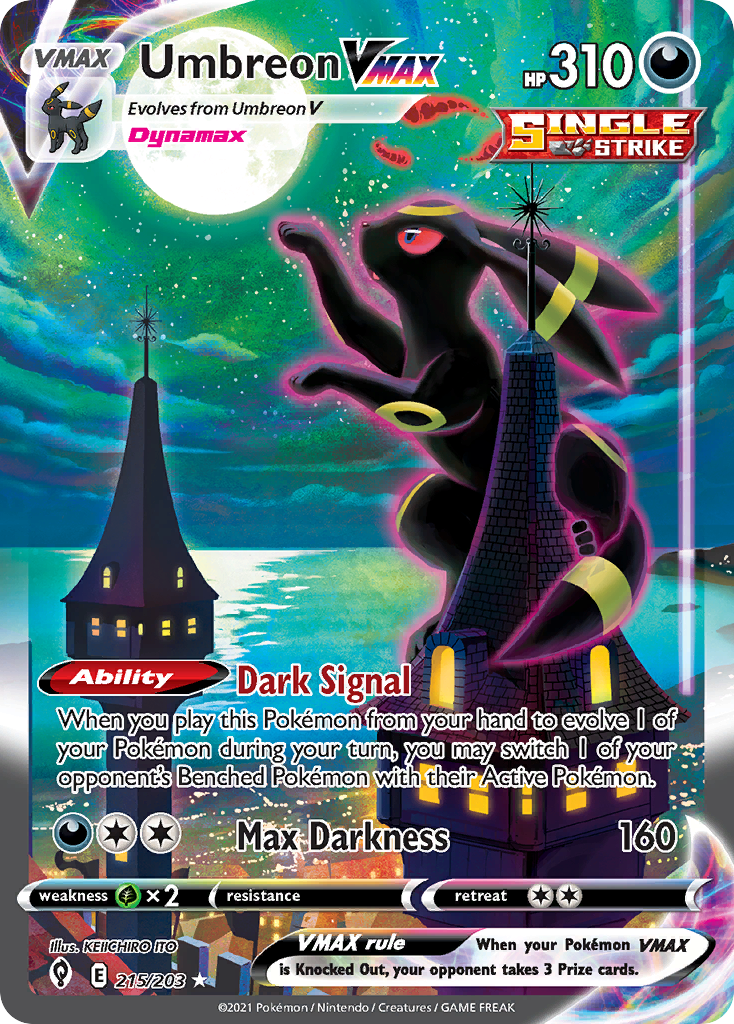
A card like Umbreon VMAX Alt Art — trading at $150–$400 raw — deserves proper archival storage. A perfect fit sleeve, UV one-touch holder, stored in a D-ring binder or rigid storage box in a climate-controlled interior room will preserve this card's condition for decades.
What NOT to Do
Some damage patterns appear so consistently in collections that they deserve explicit warning:
- Rubber bands: Never use rubber bands around card stacks. The rubber degrades and transfers chemicals to card surfaces; the band pressure creates permanent indentation marks on edges and corners.
- Paper clips and binder clips: Metal on card edges creates mechanical damage immediately. Never clip cards together, even temporarily.
- Direct sunlight display: A card in a one-touch or frame displayed in direct window sunlight will show measurable fading within weeks. Display cases with UV-filtering acrylic exist specifically for this purpose.
- Attic and basement storage: As discussed — extreme temperature and humidity swings will damage cards stored here over the medium term.
- Leaving cards on surfaces: Cards left loose on desks, shelves, or counters attract dust, humidity, and handling damage. Sleeve first, then store.
- Storing cards in contact with newspapers or non-archival paper: Newspaper off-gasses acids that will yellow and degrade cards over time.
Building Your Storage System
For most collectors, a tiered system makes practical sense:
- Tier 1 (bulk / commons): Penny sleeve → BCW long box with labeled dividers
- Tier 2 (mid-value singles $10–$100): Perfect fit → outer sleeve → top loader → labeled storage bin
- Tier 3 (high-value singles $100+): Perfect fit → UV one-touch holder → stored in sealed container with silica gel
- Display pieces: UV one-touch or UV-filtered display case, interior wall away from windows
The system doesn't need to be complicated. The key is that it's consistent — cards should never exist in an "unsorted pile" state for more than a few minutes before being sleeved and placed in their appropriate tier.
Track your collection on Hardcore Collectors →Related Articles
Share this article
Track Every Card Mentioned in This Article
Add cards to your collection, watch market prices move in real-time, and connect with other collectors.
Create Free Account →